

Thomas proudly told everyone he had a deep and meaningful relationship with his wife, Margaret.
“Marriage,” he would say, with the confidence of a man who had read at least three leadership books and underlined half of one of them, “is all about consistency, order, and proper structure.”
No one really knew what he meant by that, but he said it so often and with such gravitas that people usually nodded and assumed he was wise.
Every Sunday morning at exactly 10:00 a.m., Thomas entered the living room wearing a blazer. Margaret was already seated in the same chair she always sat in, because Thomas had once explained that spontaneity was the enemy of decency.
He began, as always, with the Opening Acknowledgment.
“Good morning, Margaret,” he said warmly but efficiently.
“Good morning, Thomas,” she replied.
Then came the Song Portion of the Relationship.
Thomas sang three songs to her every week. The same style, same tempo, same emotional arc. The first was upbeat and celebratory. The second was slower and more reflective. The third was intended to build toward emotional intensity, though after eleven years it mostly built toward coffee.
Margaret once asked, “Could we ever just talk?”
Thomas smiled patiently, the way a man smiles when someone has suggested replacing the Constitution with refrigerator poetry.
“Of course,” he said, “but not yet. We haven’t finished the music.”
After the third song, Thomas moved into the Weekly Contribution Moment.
He reached into his own wallet, removed a twenty-dollar bill, and placed it in a decorative basket sitting on the ottoman.
Margaret watched.
Thomas nodded solemnly. “This represents my commitment to our relationship.”
“But… that’s your money,” she said. “And it’s staying in our house.”
He looked slightly wounded. “Margaret, please. Don’t make this transactional.”
Then came the Greeting Time.
Thomas turned to her, shook her hand, and said, “It’s wonderful to see you this morning.”
“You saw me at breakfast.”
He lowered his voice. “This is the relational portion.”
“Oh.”
Next was the Core of the Relationship: the Message.
Thomas opened a leather notebook titled Marriage Principles: A Three-Point Approach and delivered a 28-minute talk to Margaret about the importance of closeness.
Point one: Communication matters.
Point two: Love requires intentionality.
Point three: Relationships thrive on presence.
Margaret raised her hand.
Thomas blinked. “Questions are usually held until after the closing.”
“But you’re talking about communication.”
“Yes,” he said, “and I’m doing an excellent job of it.”
He continued.
Sometimes, to keep things fresh, he used props. One week he brought out a potted fern and explained that marriage was like watering a plant. Another week he held up a power strip and said relationships only work when properly connected to the source. Once he used a loaf of sourdough in a way that neither clarified his point nor helped lunch.
Margaret tried, on several occasions, to participate more naturally.
One Sunday, during the second song, she said, “Thomas, I had a hard week. My mother is sick, the sink is leaking, and I honestly feel lonely.”
Thomas nodded sympathetically and whispered, “That is very powerful, Margaret, but we really need to keep moving if we’re going to stay on schedule.”
Another time she said, “Could we go for a walk? Could we sit on the porch and talk about what we’re actually feeling? Could we laugh together? Could we argue and work it out? Could we maybe know each other outside this one-hour format?”
Thomas looked troubled, even concerned.
“I think,” he said slowly, “you may be rejecting the relationship model itself.”
Margaret stared at him.
“I’m not rejecting the relationship,” she said. “I’m rejecting the idea that the relationship only exists in this model.”
Thomas sighed. “That sounds very individualistic.”
To deepen their bond, Thomas also introduced a midweek check-in. Every Wednesday at 6:30 p.m., he texted her a quote about love from a mug or calendar and wrote, “Be encouraged.”
He considered this discipleship.
For anniversaries, he did something very special. He extended the Sunday meeting by twelve minutes and added a fourth song.
Margaret once suggested that perhaps a real marriage involved more than scheduled presentations.
“Thomas,” she said, “a relationship is not built by me sitting quietly while you perform sincerity in an organized sequence. A real relationship includes listening, interruption, surprise, mutuality, awkwardness, delight, grief, conflict, repair, inside jokes, unplanned tenderness, and actual presence.”
Thomas frowned.
“That sounds messy.”
“It is.”
“That sounds inefficient.”
“It is.”
“That sounds like it would be difficult to control.”
Margaret leaned forward. “Exactly.”
Still, Thomas remained committed to the System.
He created a Relationship Team. He printed bulletins. He developed a seasonal calendar. He formed a Hospitality Committee, though it was mostly unnecessary since the only attendees were himself and Margaret, and Margaret was no longer entirely sure she wanted to come.
Then one Sunday, halfway through the second song, Margaret stood up.
Thomas froze. No one stood during the second song.
“Where are you going?” he asked.
“For a walk,” she said.
“But we are in the middle of our relationship.”
“No,” she said. “You are in the middle of your program.”
That landed harder than he expected.
He sat down slowly.
The room was quiet except for the faint hum of the air conditioner and the sound of a man realizing that he had confused ritual with intimacy.
A few minutes later, he found her outside on the porch.
She was not holding a bulletin.
She was not waiting for the offering basket.
She was not prepared for a three-point presentation.
She was just there.
Thomas sat beside her.
For a while, neither of them spoke.
Then he said, “I’m not sure I know how to do this without the format.”
Margaret smiled. “That’s the first honest thing you’ve said all morning.”
He laughed.
Really laughed.
Not the polished chuckle he used during Greeting Time, but an actual laugh.
Then they talked.
Not in outline form.
Not in a scheduled segment.
Not with background music.
They talked about fear, disappointment, hope, boredom, memories, bills, her mother, his anxiety, their early years, their regrets, the strange shape of love, and why he had once believed that a relationship could be managed like an event.
They stayed there for hours.
No one passed a basket.
No one sang a bridge seven times.
No one summarized the conversation into action steps.
And yet, somehow, it was the most relational thing they had done in years.
Later Thomas would still say that order had its place. Structure had value. Rhythms could be helpful.
But he no longer mistook the container for the relationship.
Because in the end, a living relationship cannot be reduced to a weekly program, no matter how polished the program may be.
A person is not known by attending an event in their honor.
And love, if it is real, stubbornly refuses to fit inside three songs, an offering, and a sermon.
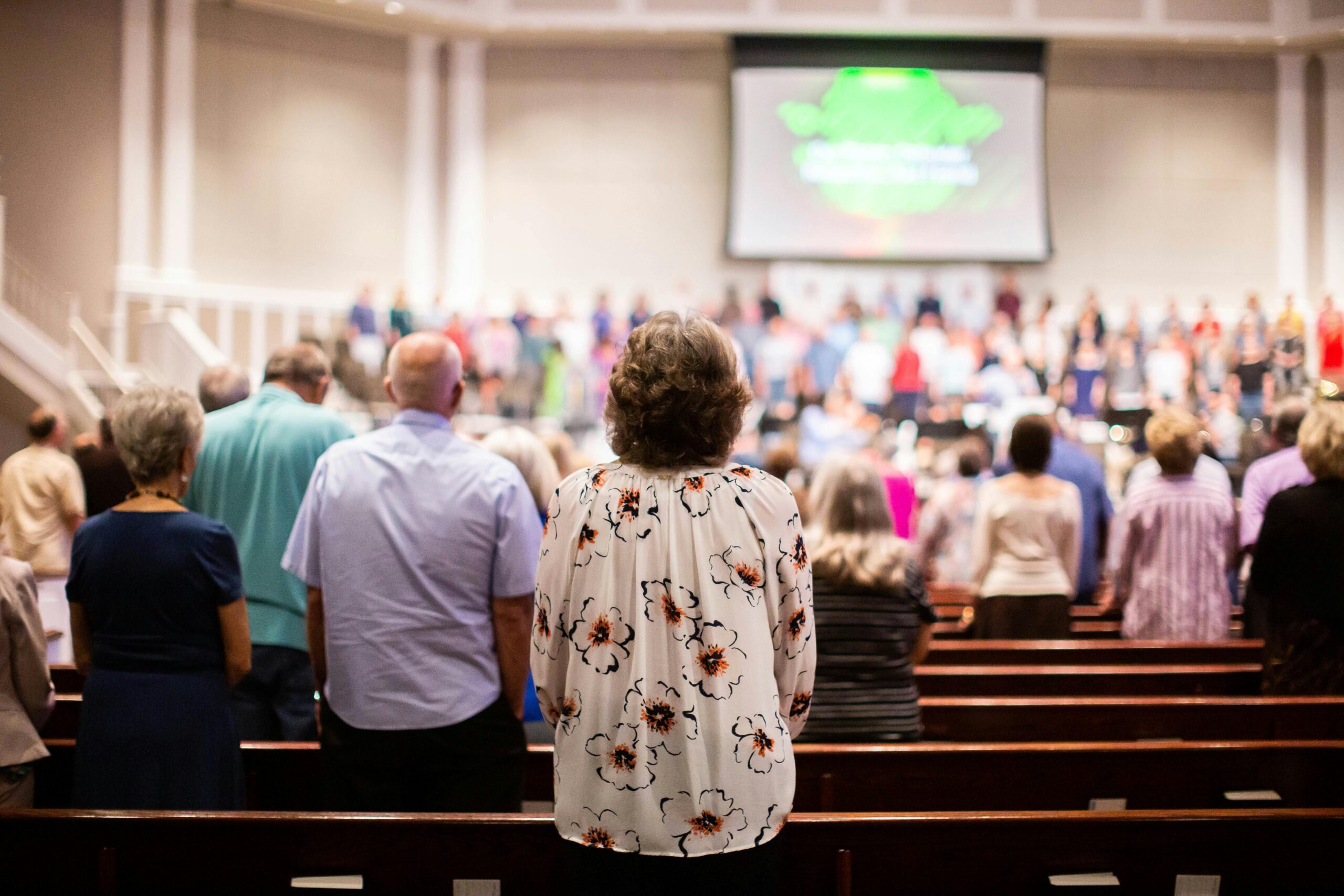
I created this story to show the oddity (absurdity??) of trying to develop a relationship with God through the formulas of institutional church. A relationship with God should resemble a living, personal, ongoing connection rather than a scheduled weekly observance. In a real relationship, there is listening, honesty, spontaneity, dependence, affection, struggle, growth, and familiarity built over time. It touches ordinary life, not just sacred moments. Yet in church culture we often reduce that relationship to a predictable event: show up at the appointed hour, sing the expected songs, hear the prepared sermon, give the offering, and leave assuming intimacy has occurred because the format was completed. The difference is profound. One is a dynamic walk with a living God who meets people in silence, questions, repentance, joy, suffering, and daily obedience; the other can become a managed religious routine that talks about relationship while keeping it confined inside institutional patterns. Church can support relationship with God, but it becomes odd when the institution begins to function as though the program is the relationship itself.
No institutional pastor worth their salt would say that church services are the only form of relationship-building with God, of course. They would insist that relationship happens outside of the church service as well. They would absolutely have to hedge their bet so they were not completely responsible for your relationship with God. However, try skipping a few weeks or months of services and see what happens to their view of your relationship with God!
Instead of the institutional church model of building a relationship with God, thinking of it as a real relationship (because it is). If you were trying to get to know someone, would you insist on a strict format for that to happen? Would it have to be prescribed? Not that you can’t plan but wouldn’t likely limit it to once, twice, or three times a week in a formal service. You would make time to get to know the person by doing things together, talking, sharing experiences, etc. You would do it in groups and one-on-one. You would be both planned and spontaneous. In a good relationship, it’s a mix of exciting, fun, personally stretching, and even sometimes painful through hard times. However, in every instance, the relationship is growing in ways that can’t always be measured.
Don’t limit your relationship to the formula.
Comments are closed