

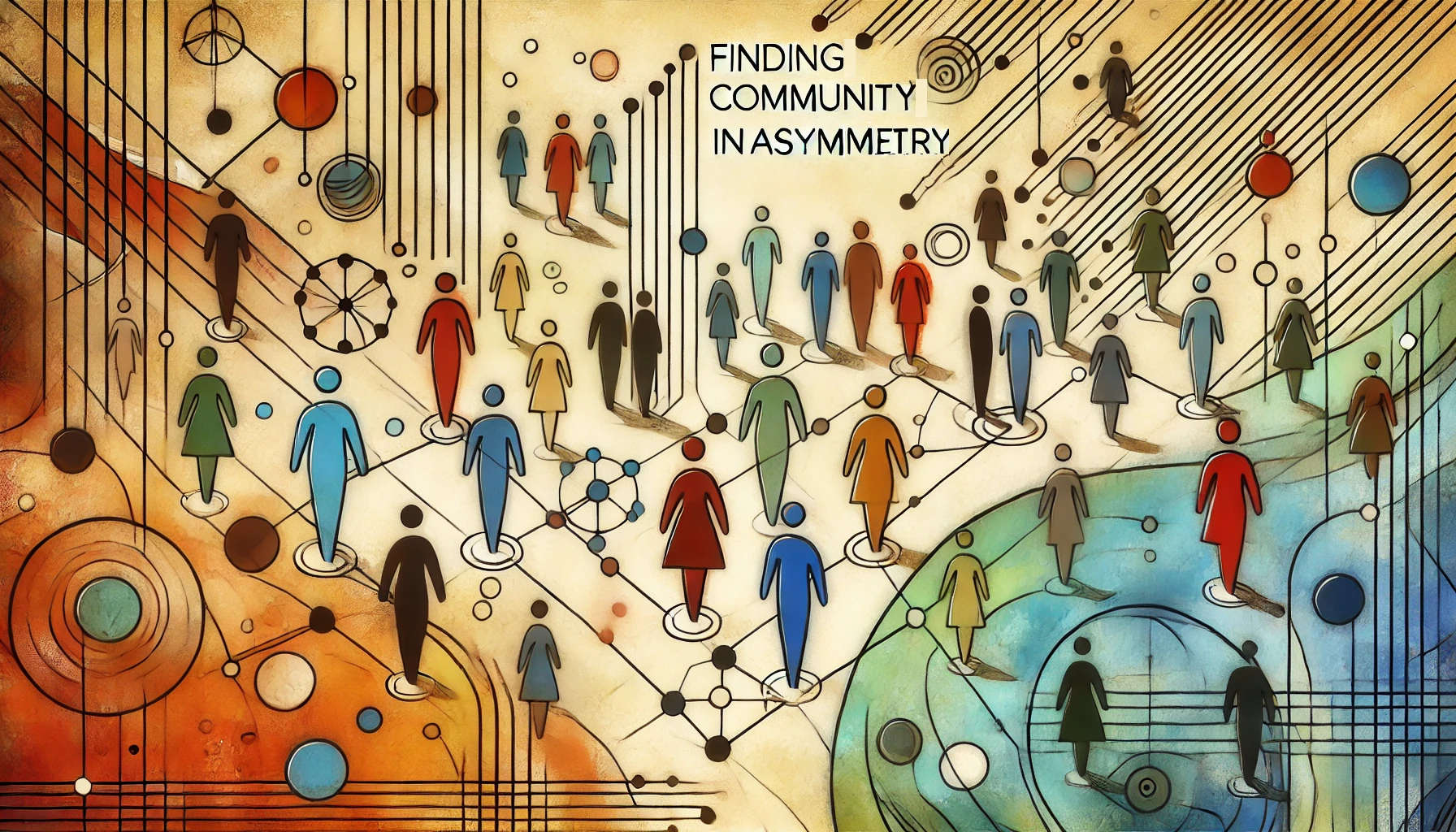
Community is an enduring human need, serving as both a buffer against life’s adversities and a celebration of its joys. Yet, not all communities fit the conventional mold. In the realm of faith, especially, the notion of an ‘asymmetric’ community is not only relevant but increasingly vital. Asymmetric communities embrace diversity in belief and practice, challenging traditional, homogeneous models of religious gatherings. They cater to those who may feel alienated by traditional structures, offering a haven for exploration and growth outside the confines of institutional boundaries.
The concept of asymmetry in community implies a flexibility and openness that is often absent in more structured environments. It suggests that community can form around shared values and mutual respect, even among individuals with differing perspectives or backgrounds. This is particularly pertinent in a world where religious affiliation is increasingly fluid, and many seek spiritual connection without institutional church constraints.
In the context of Asymmetric Faith, finding community means creating spaces where dialogue and dissent are not just tolerated but encouraged. Such environments foster deeper understanding and respect, enriching everyone involved. They reflect the biblical ideal of a body with many parts, each unique and essential (1 Corinthians 12:12-27). In these spaces, individuals can find both the freedom to express their unique viewpoints and the support of a community that values them. This is not to walk away from Biblical truths but instead to understand them more in line with the truth of the gospel instead of the the filtered versions that come through institutional churches.
Building such communities requires intentional effort. It involves active listening, openness to change, and a commitment to relationship-building over conformity. The benefits, however, are immense. Asymmetric communities can become laboratories for innovation in faith practice, spaces where new ideas can be tested and refined in the crucible of communal life.
It can get very lonely for those walking the asymmetric faith route as one of our group members notes. Developing relationships with likeminded individuals is vital. . .but can be a slow process. More than a regular friendship, asymmetric faith is so out of the norm that people don’t understand it, feeling that it is heresy or that the person seeking it has “backslid” in their faith. Many times I have attempted to invite those that I have felt were ready for the discussion of asymmetric faith into the conversation (even those with which I had a friendship) and it became clear that they were not ready for the conversation or asymmetric faith relationship yet. It’s important to make sure that those you connect with are ready to have community around the topic and that their faith is not shaken in doing so.
Finding community in asymmetry is about more than just filling seats or adhering to tradition. It’s about building meaningful connections that focus not on the celebration of traditional practices but drawing closer in relationship to the Savior, Jesus Christ. It’s about creating environments where all can grow and contribute uniquely, which ultimately enriches the community as a whole.
Comments are closed